Designing Systems 0 -> 1 for Darter
Shaping a design foundation to eliminate confusing UX, driving scalable growth through consistency, alignment, and efficiency.
Role
System Designer
Timeline
Q1 2025
Project Type
Design Systems
Result
Design Systems that boosted product shipment & Increasing user trust, make better User Experience across Darter platforms.
Context
What's Darter?
Trips optimized in 2 years
Internal Research -> Problem
The Cost of Inconsistency: Fragmented UX and Organizational Drag

Absence of Governance
The company lacked an in-house design function, leading to a disconnected product development process without centralized design strategy or standards.
Inefficient
The absence of a single source of truth resulted in an inefficient and time-consuming workflow, forcing teams to enter endless, repetitive debates over basic design attributes (e.g., specific color values, typography sizing).
Platform & UX Issues
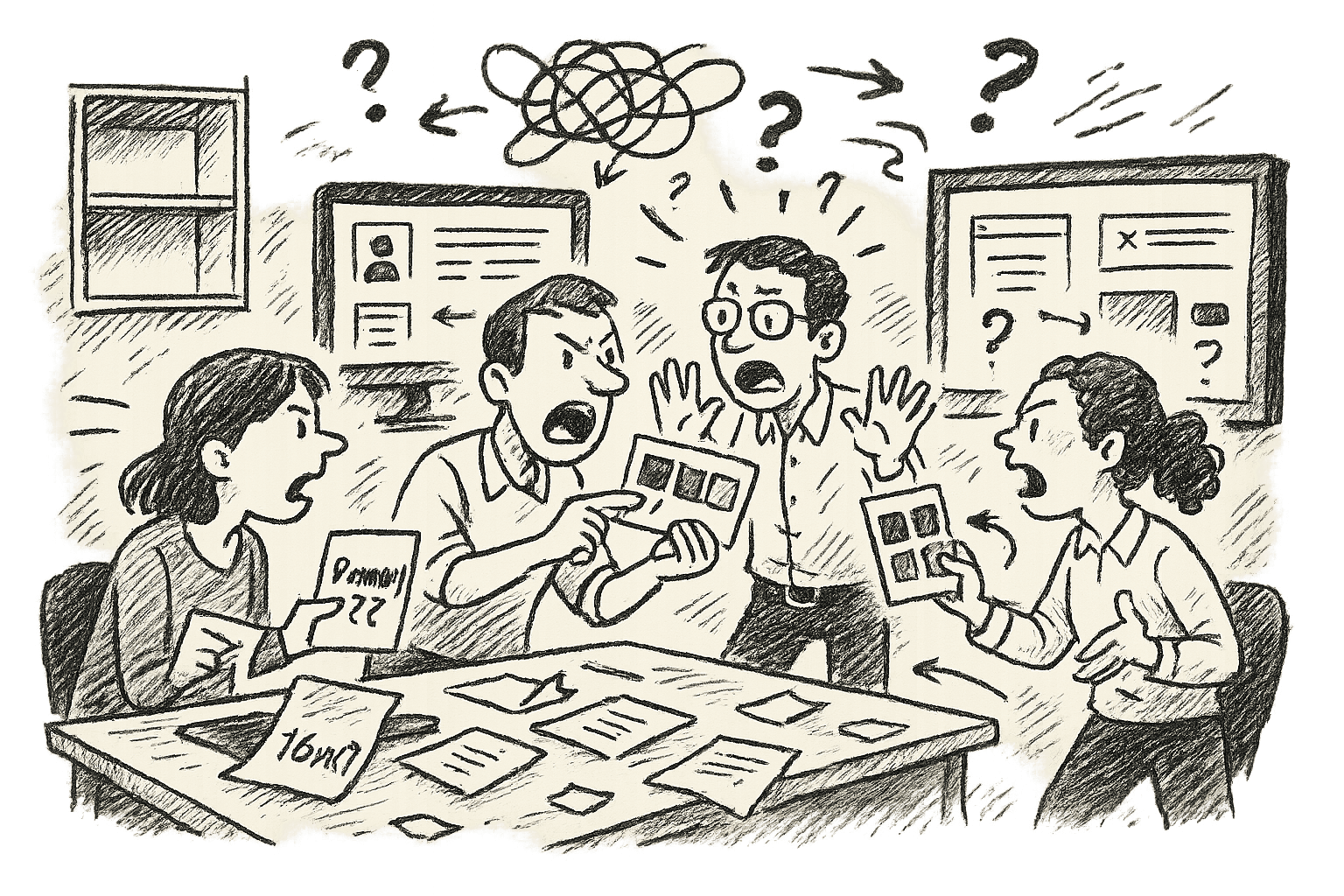
Lack of design foundation
The platform was built on a weak foundational layer, teams were unintentionally rebuilding the same components repeatedly, slowing down velocity and increasing maintenance cost.
Fragmented User Experience
This lack of foundation caused a scattered visual hierarchy and conflicting component behaviors across the product, resulting in a confusing and inconsistent experience for the end-user.
Strategic Alignment
The core mandate was to create a scalable web and mobile platform foundation to support the company's expansion to more cities and services.
Established a clear, measurable strategic objective for the design team. Framed the design project as critical business enablement, not just a cosmetic refresh.

Result
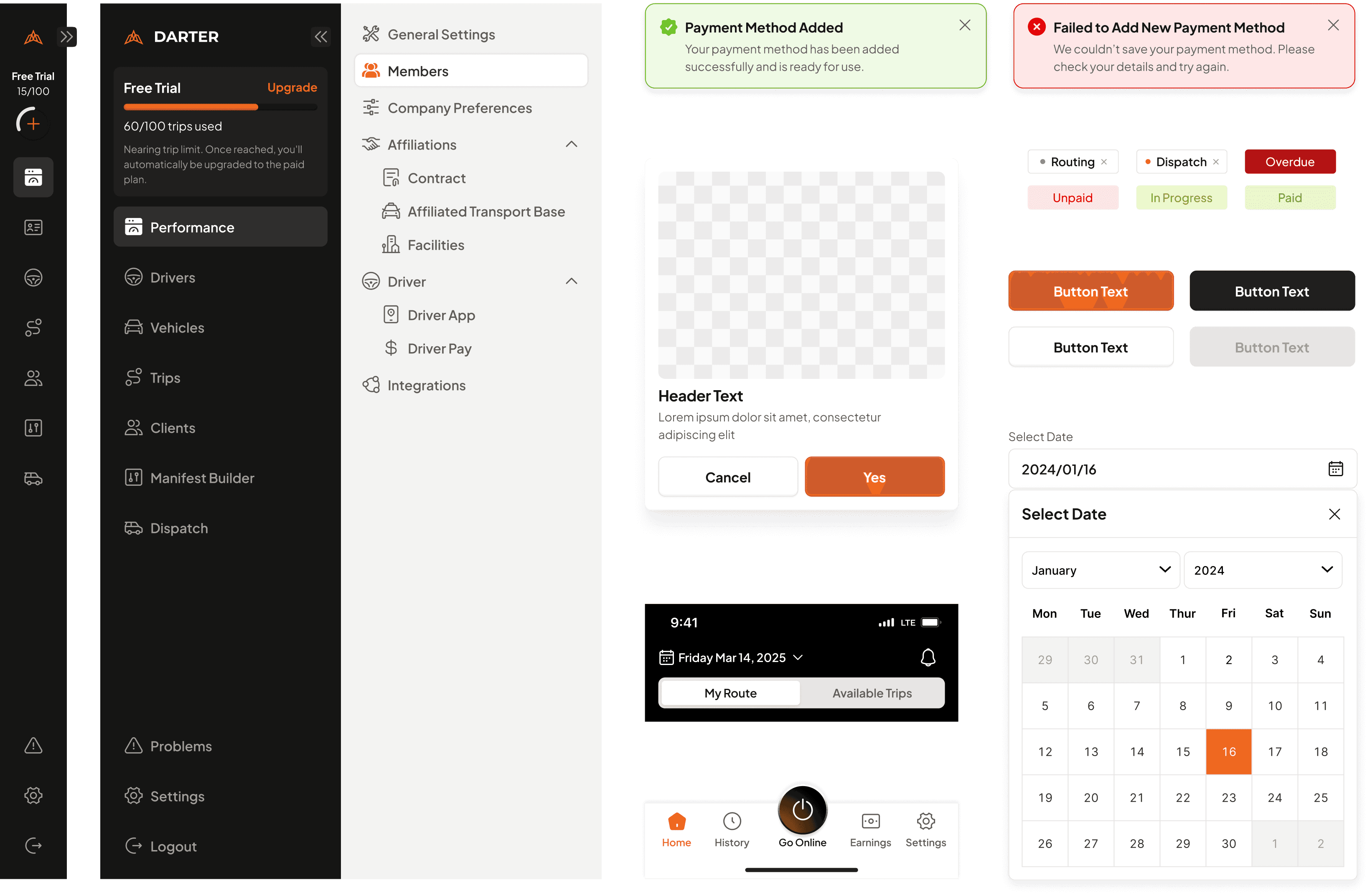
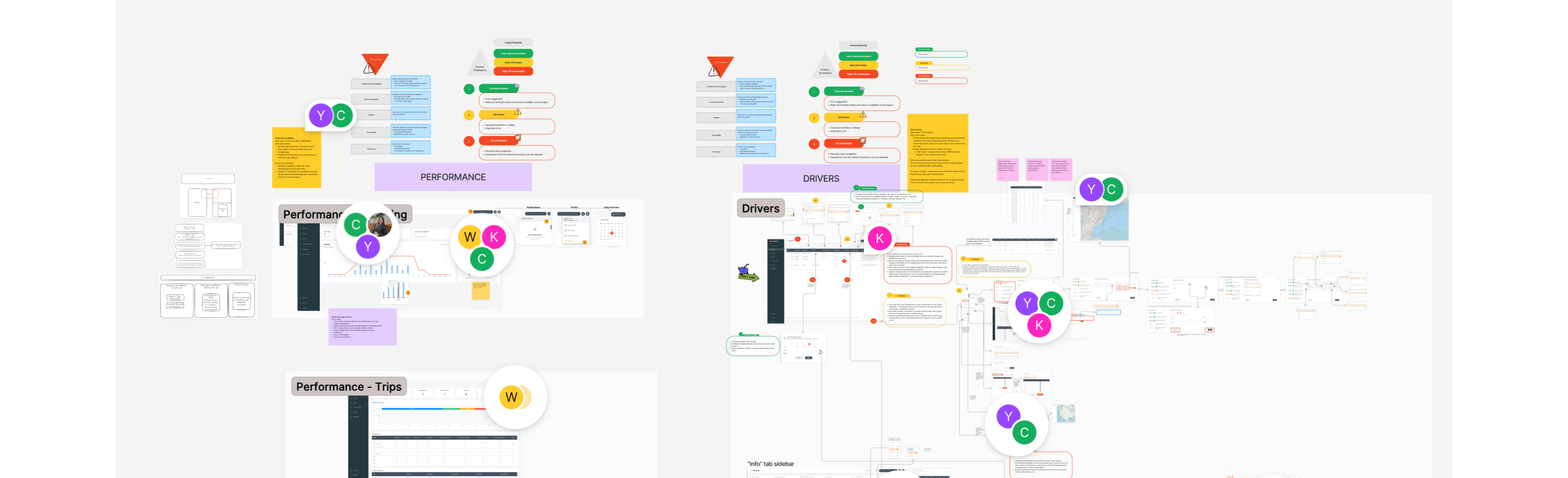
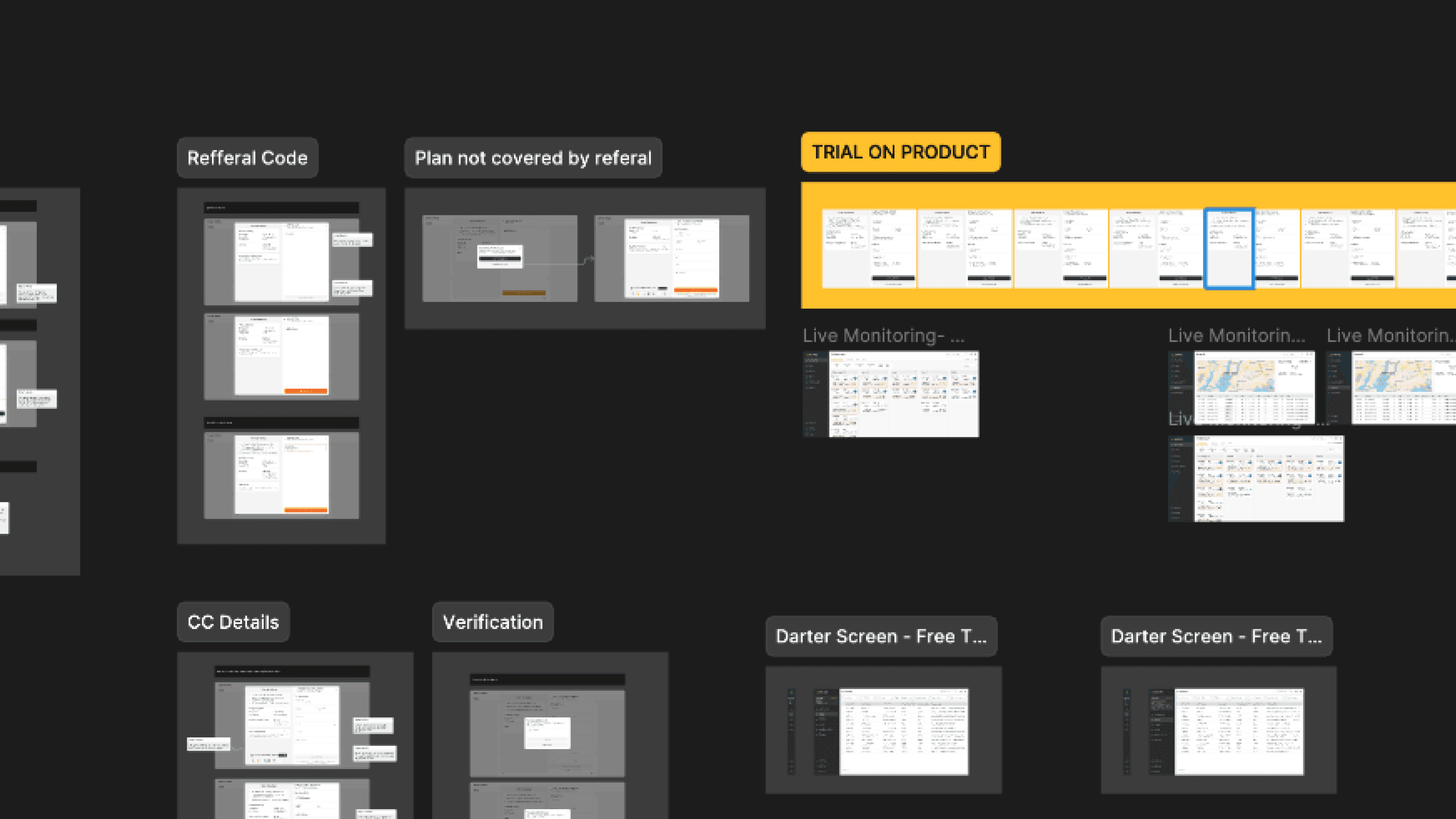
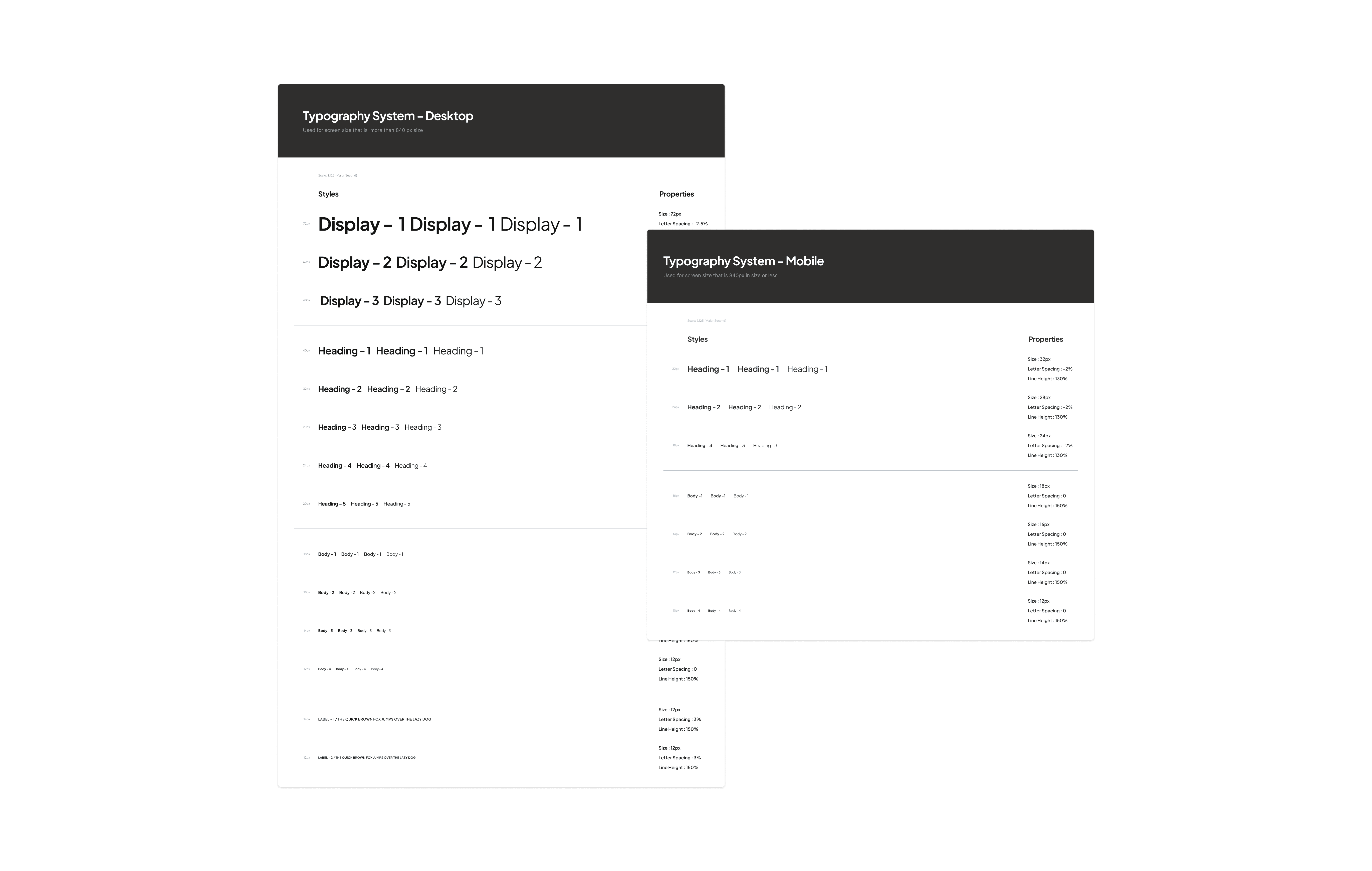
A new Scalable Tokens Library
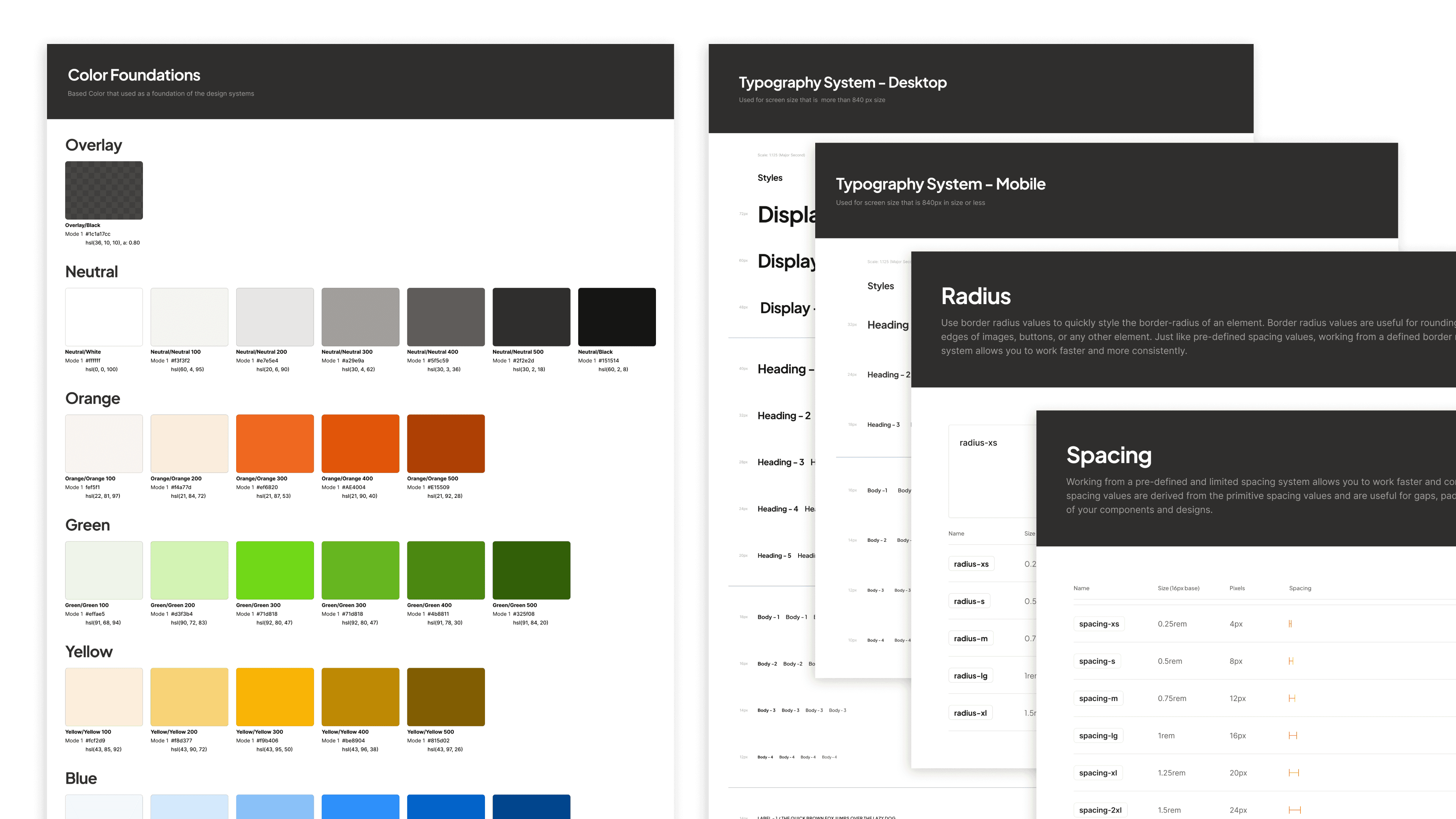
Successful implementation of a complete design token library, centralizing typography and color as foundational elements, and establishing a cohesive numeric scale based on multiples of four (4px, 8px, 12 px, etc) for defining consistent spacing and border radius across all product components.
Growing the Design Library
Components Audit
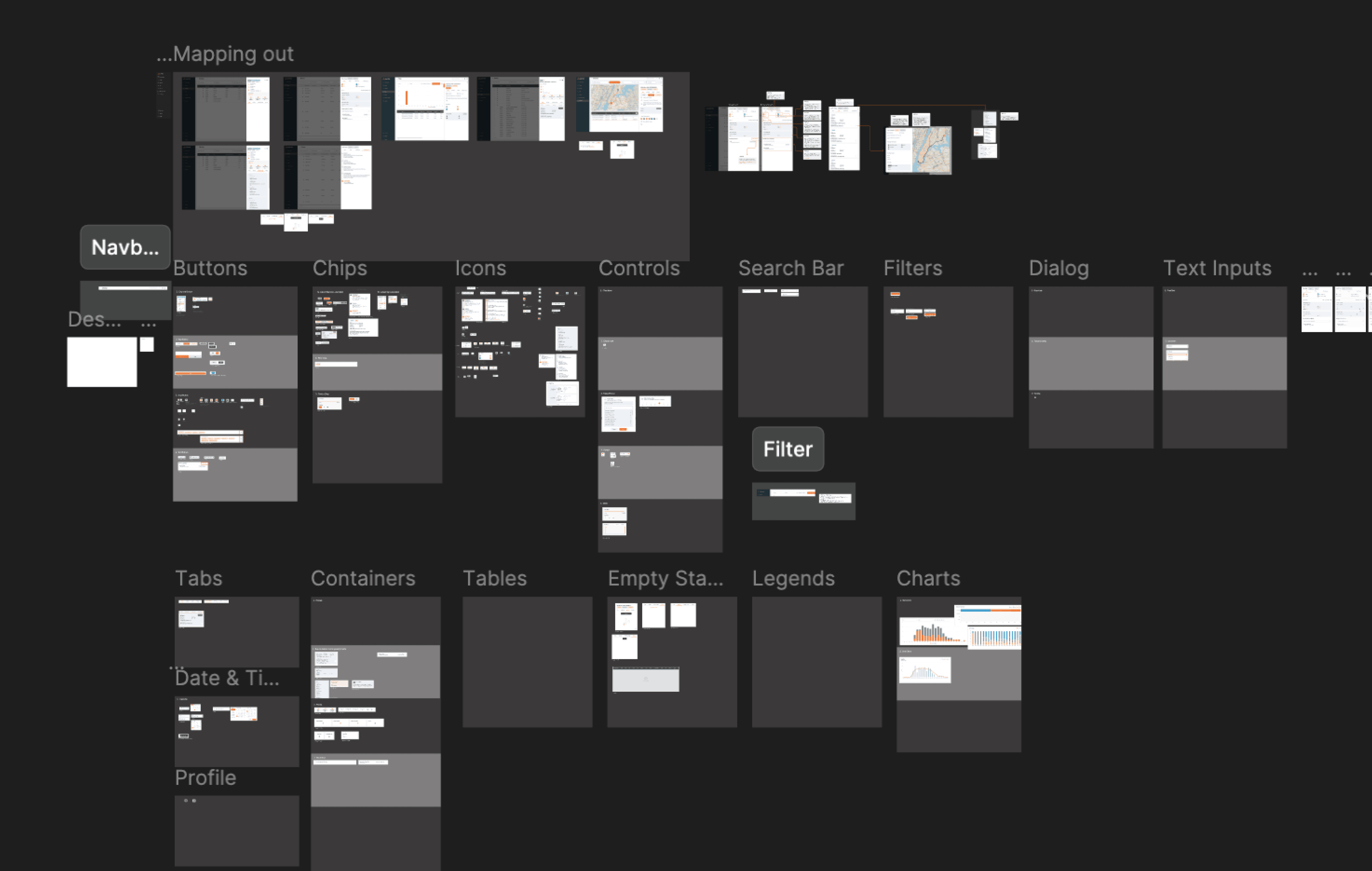
With the foundational design token library now complete, the next crucial step was an intensive audit of existing components. Start with surveyed the entire product UI to identify areas of highest inconsistency and impact. This process allowed us to intelligently prioritize which components would be built first, ensuring our initial efforts delivered maximum cohesion and addressed the most critical user experience pain points.
Prioritized Build:
Maximizing Cohesion with High-Impact Components
With the foundational design token library now complete, the next crucial step was an intensive audit of existing components. We meticulously surveyed the entire product UI to identify areas of highest inconsistency and impact. This process allowed us to intelligently prioritize which components would be built first, ensuring our initial efforts delivered maximum cohesion and addressed the most critical user experience pain points.
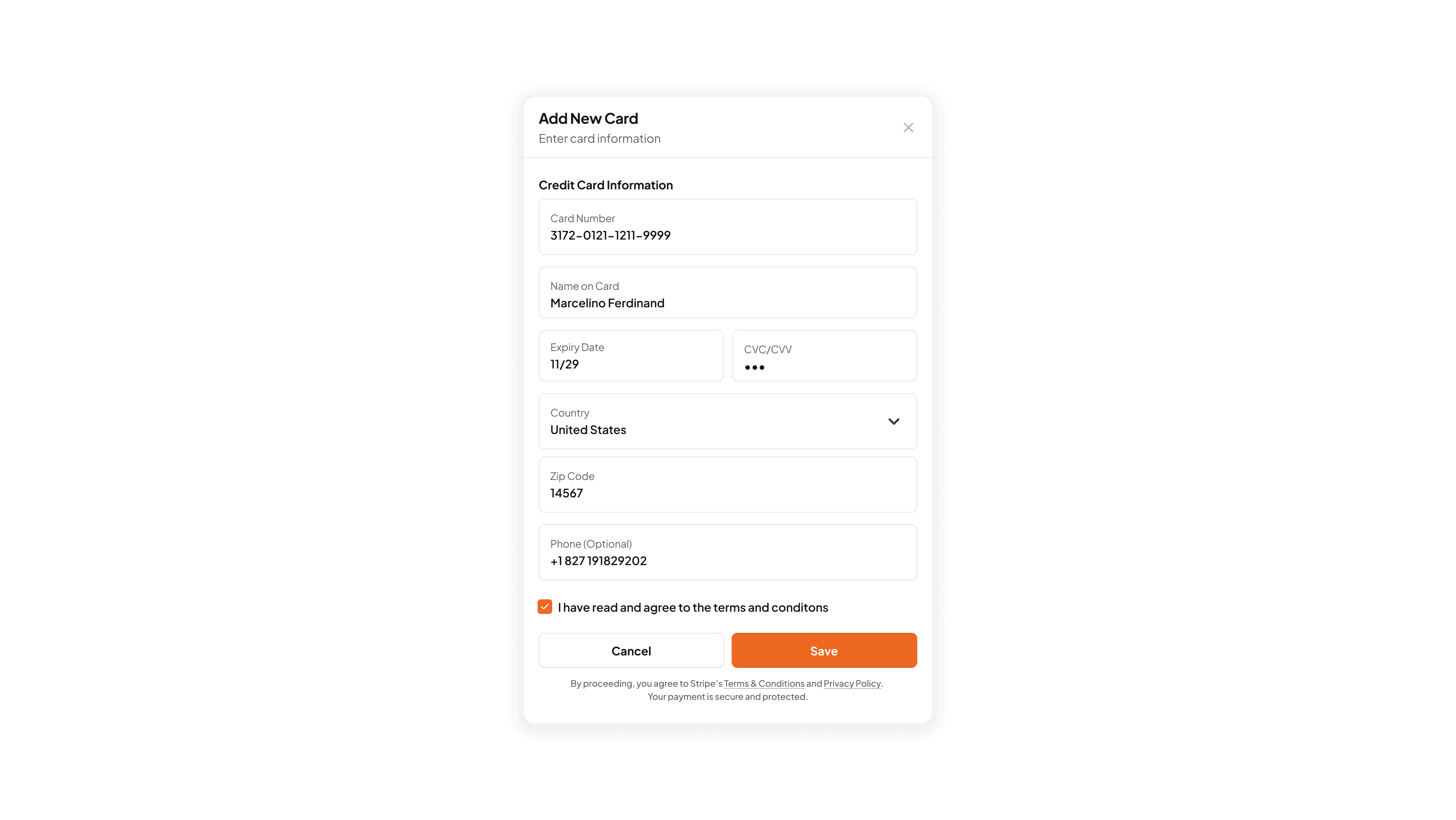
Straightly use on a Product & Growing
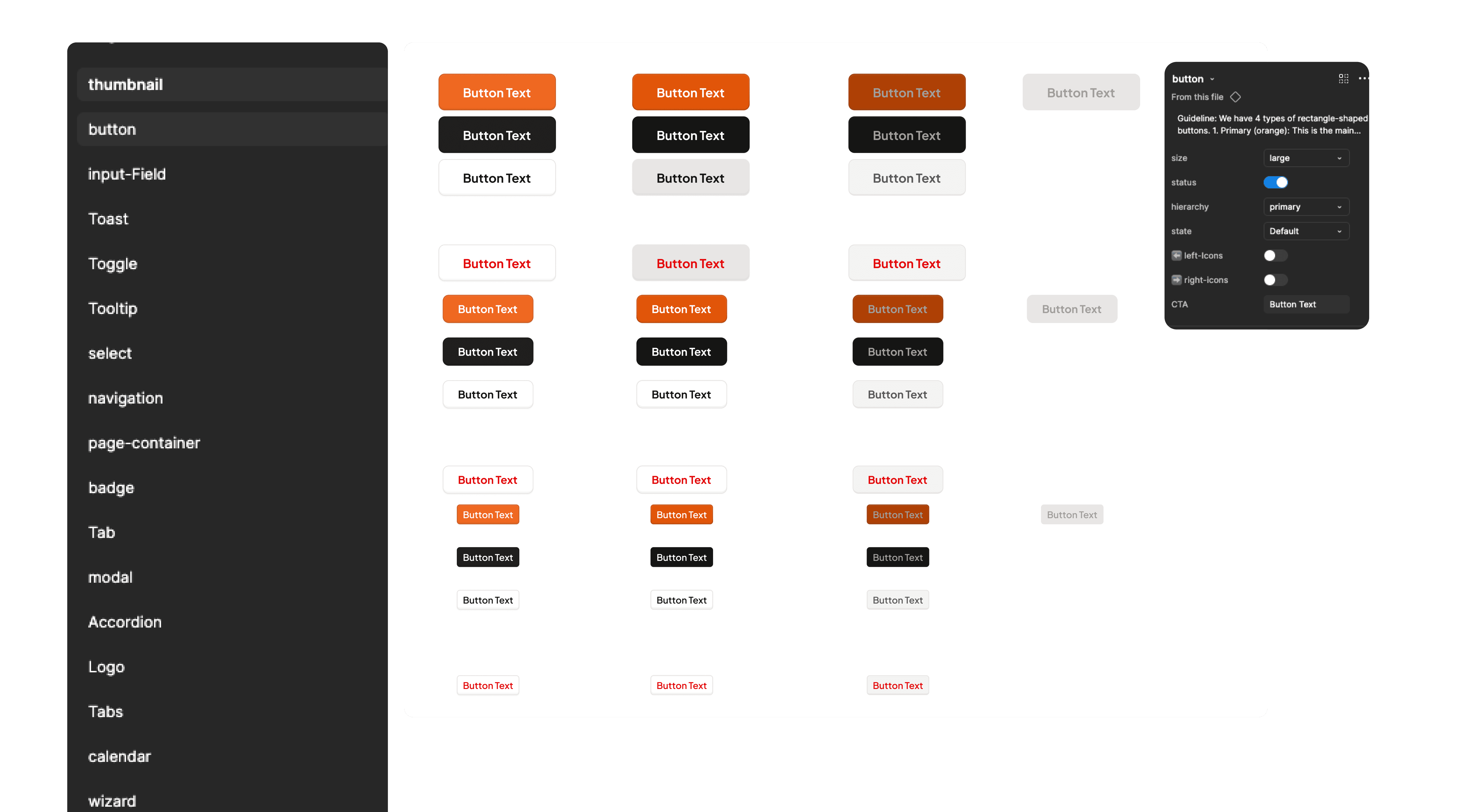
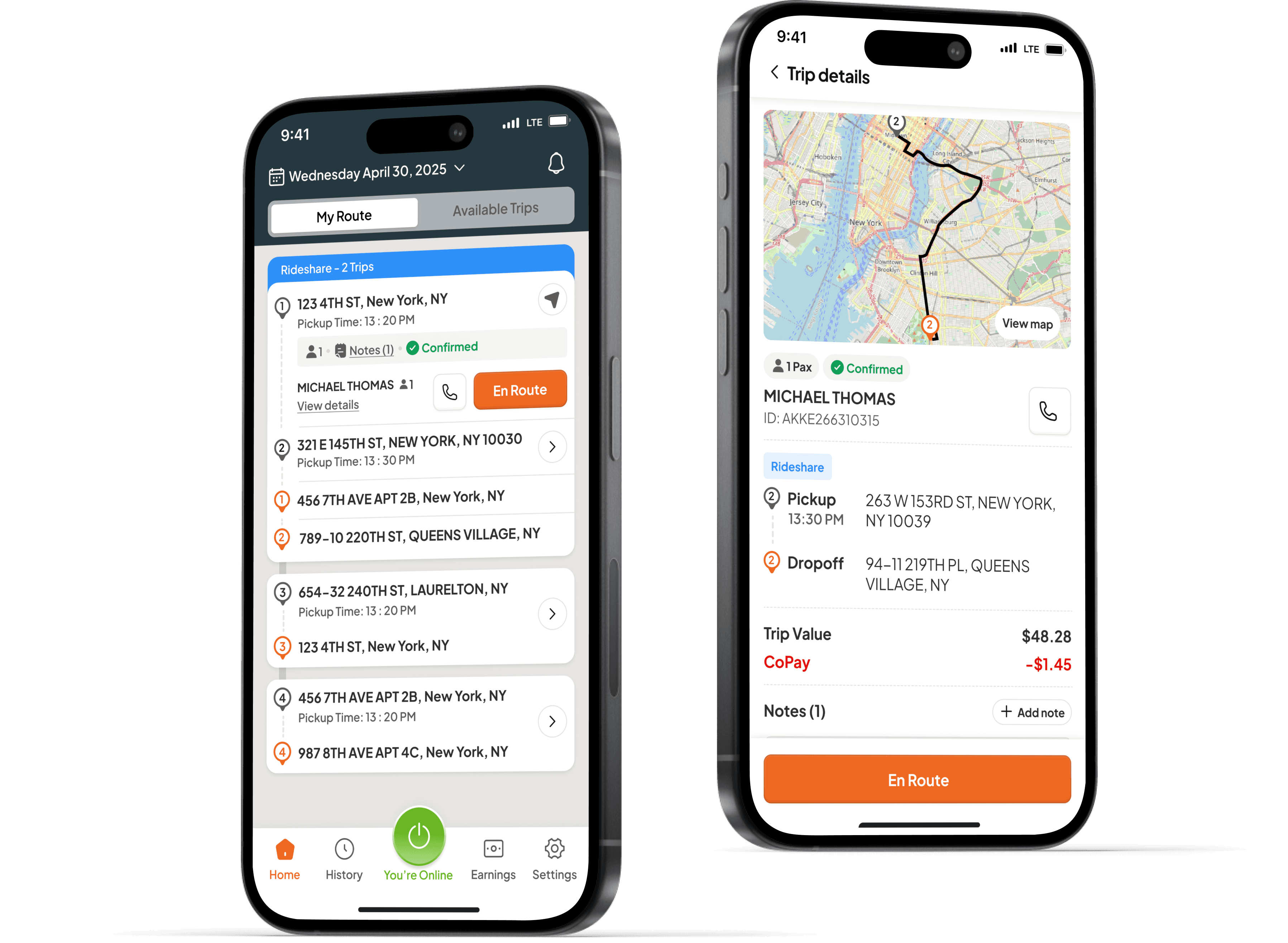
Applying our initial components to live products delivered immediate real-world validation, maximizing our Efficiency. We committed to treating the library as a living system, constantly refining it and filling gaps as new needs emerged during development. This iterative process is key to maintaining Scalability, guaranteeing the library remains the foundational source of truth for future growth.
On Product Implementation
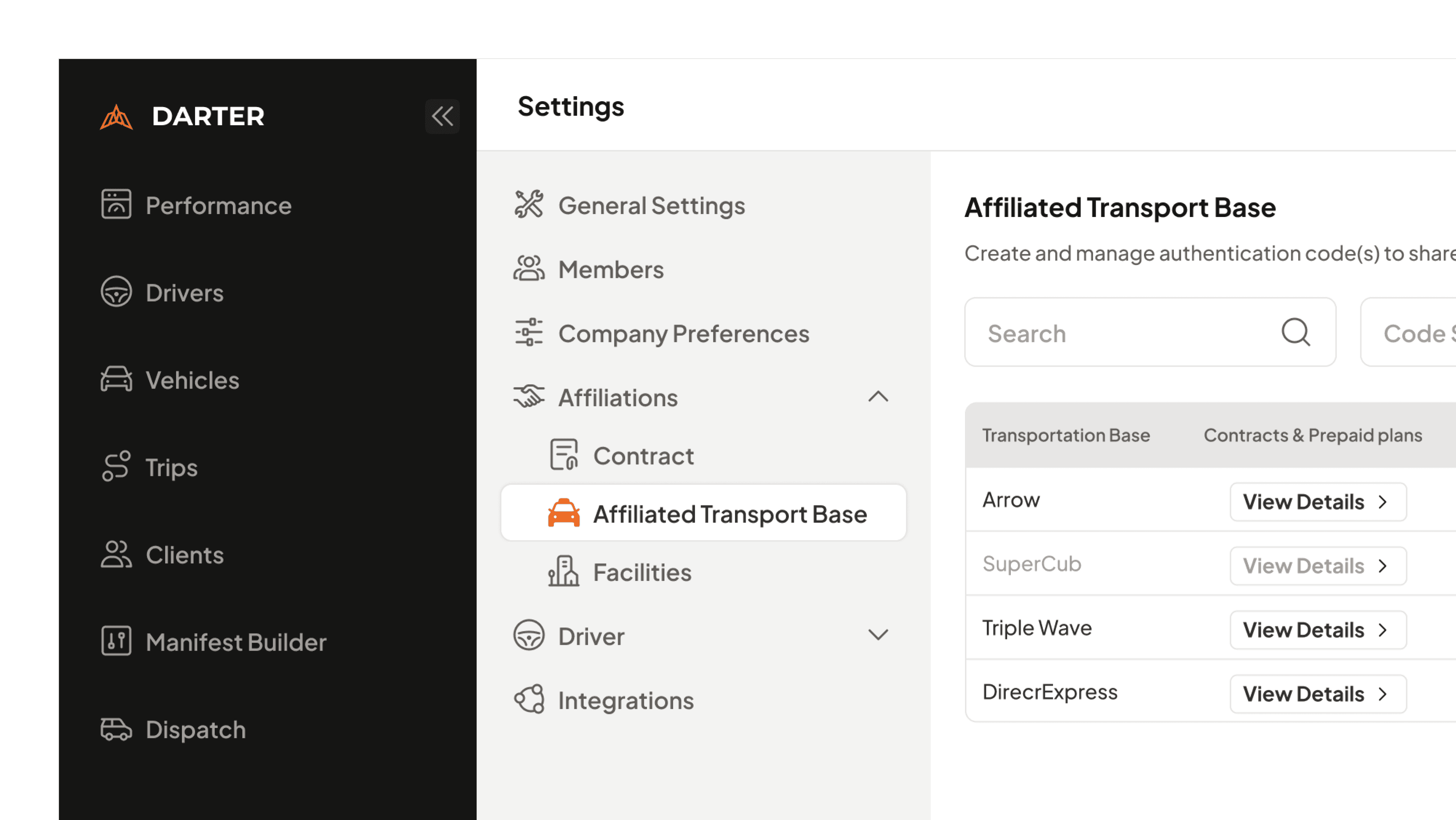
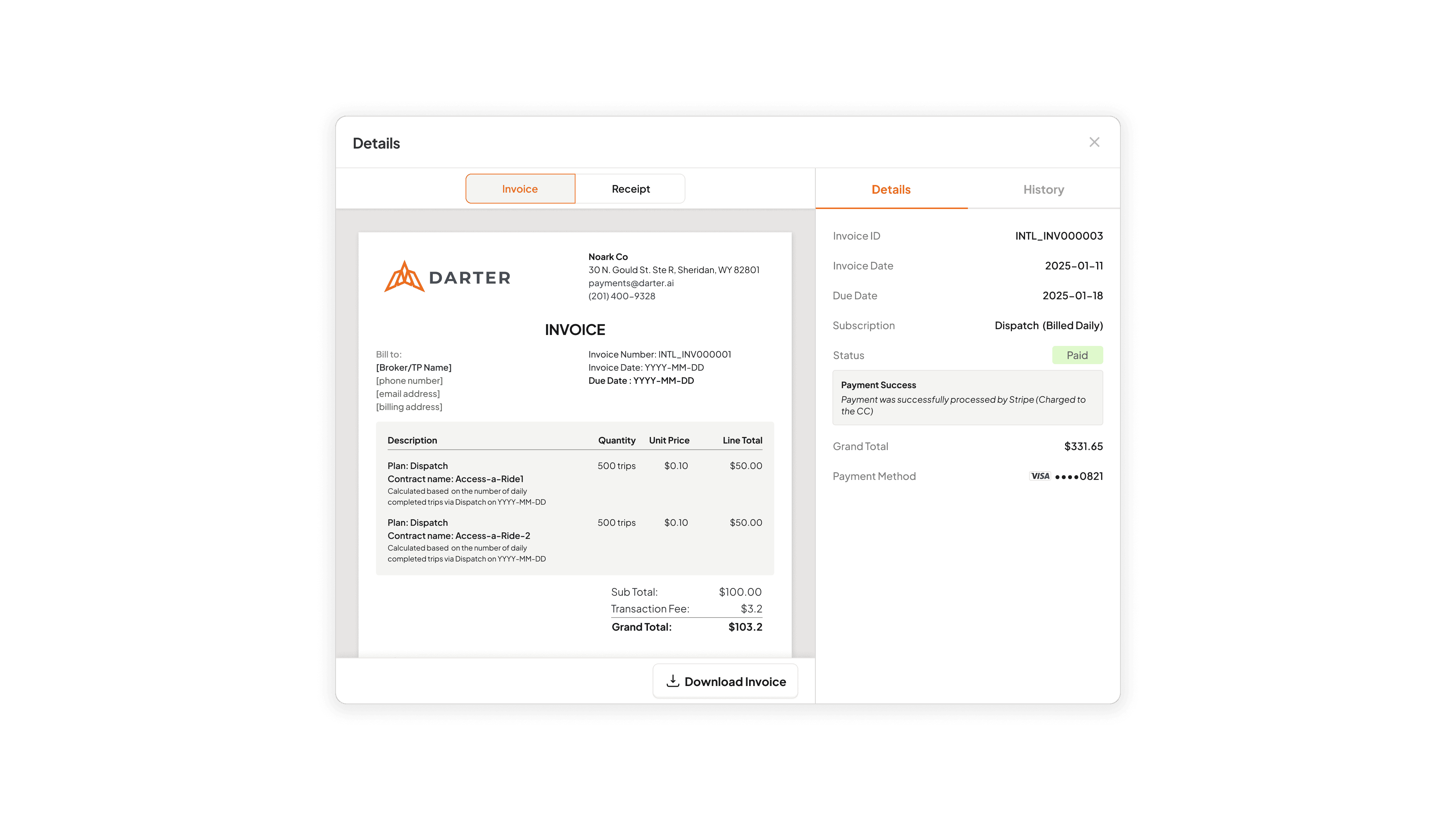
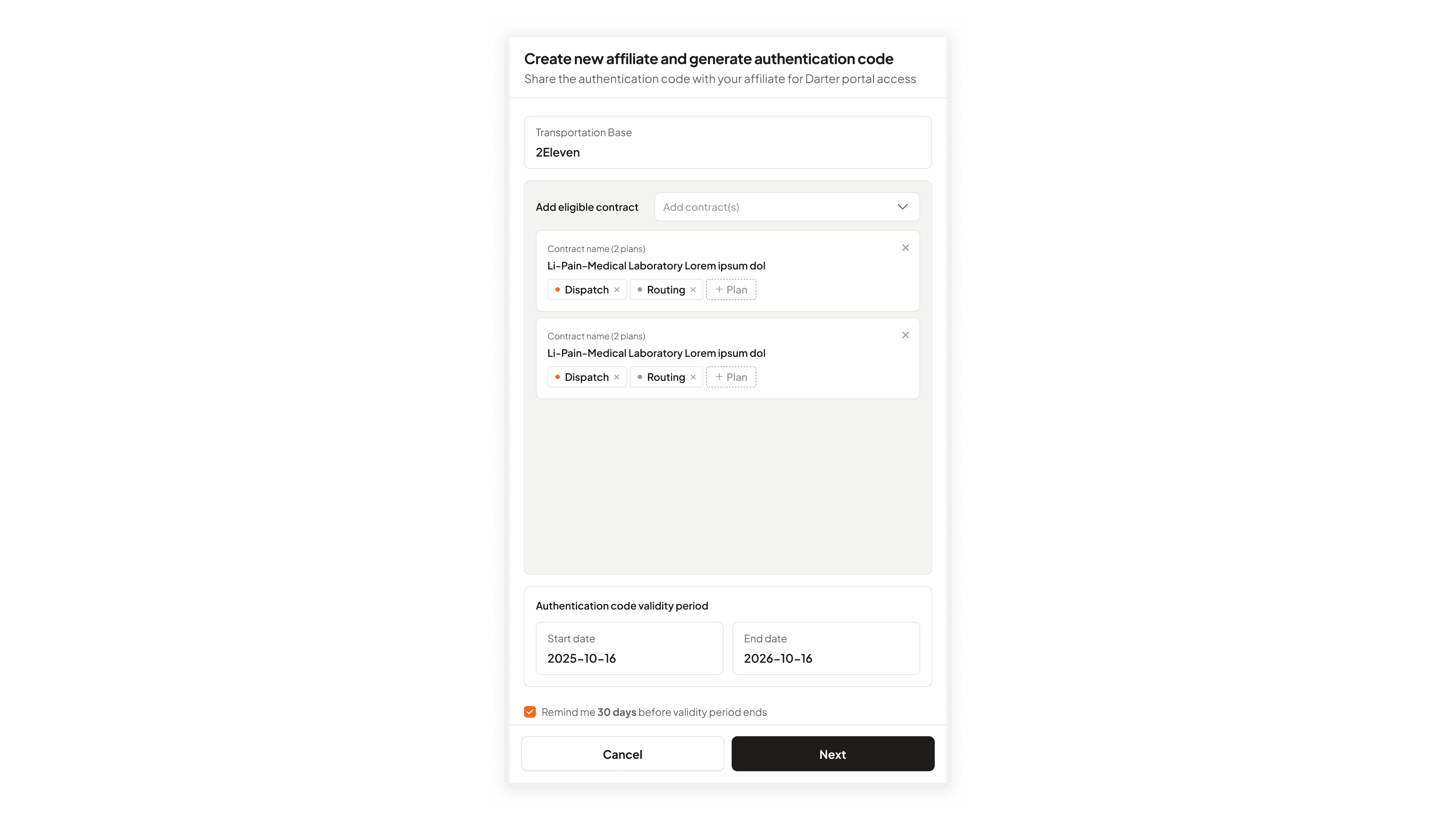
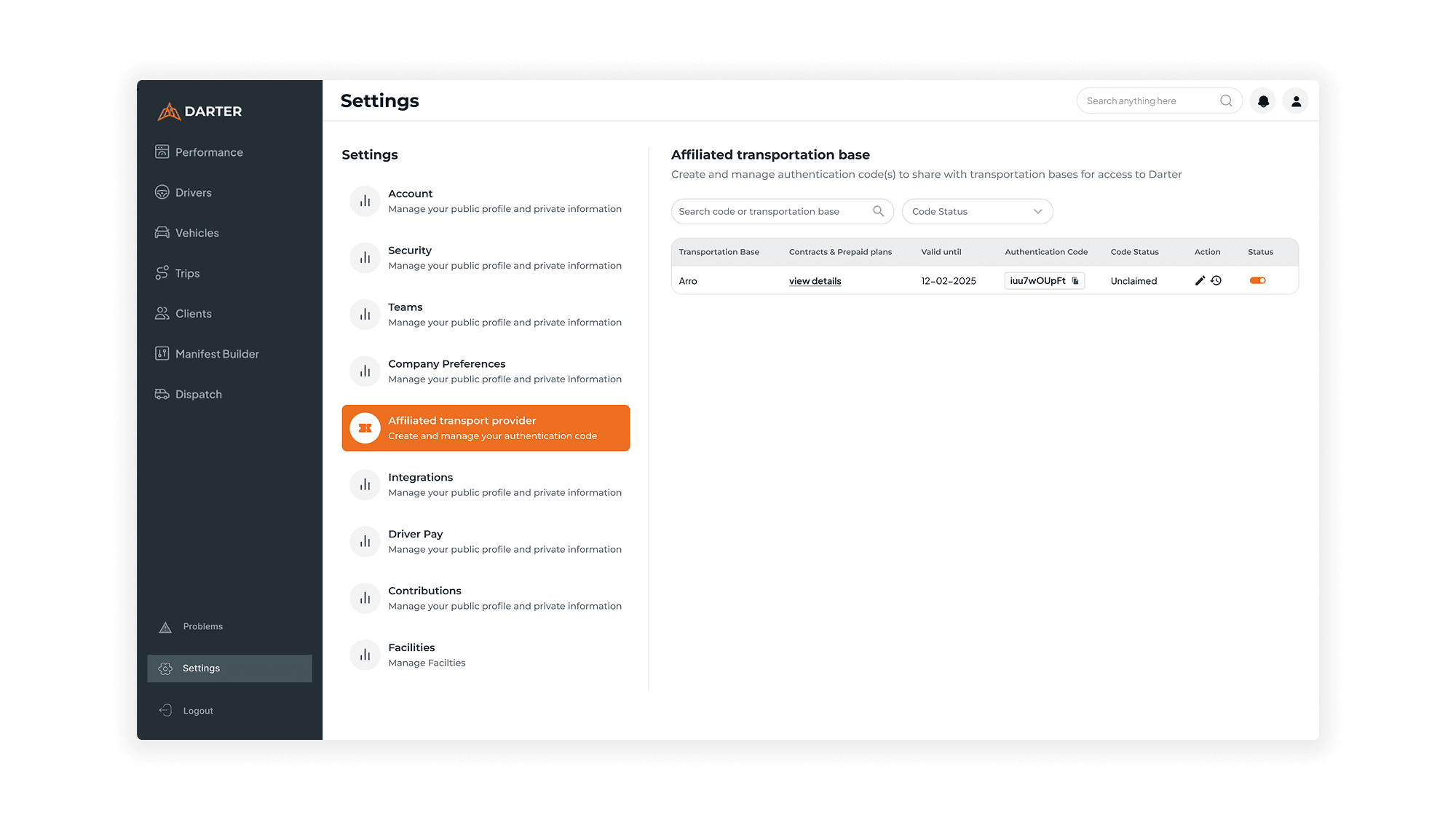
Scalable Navigation Components
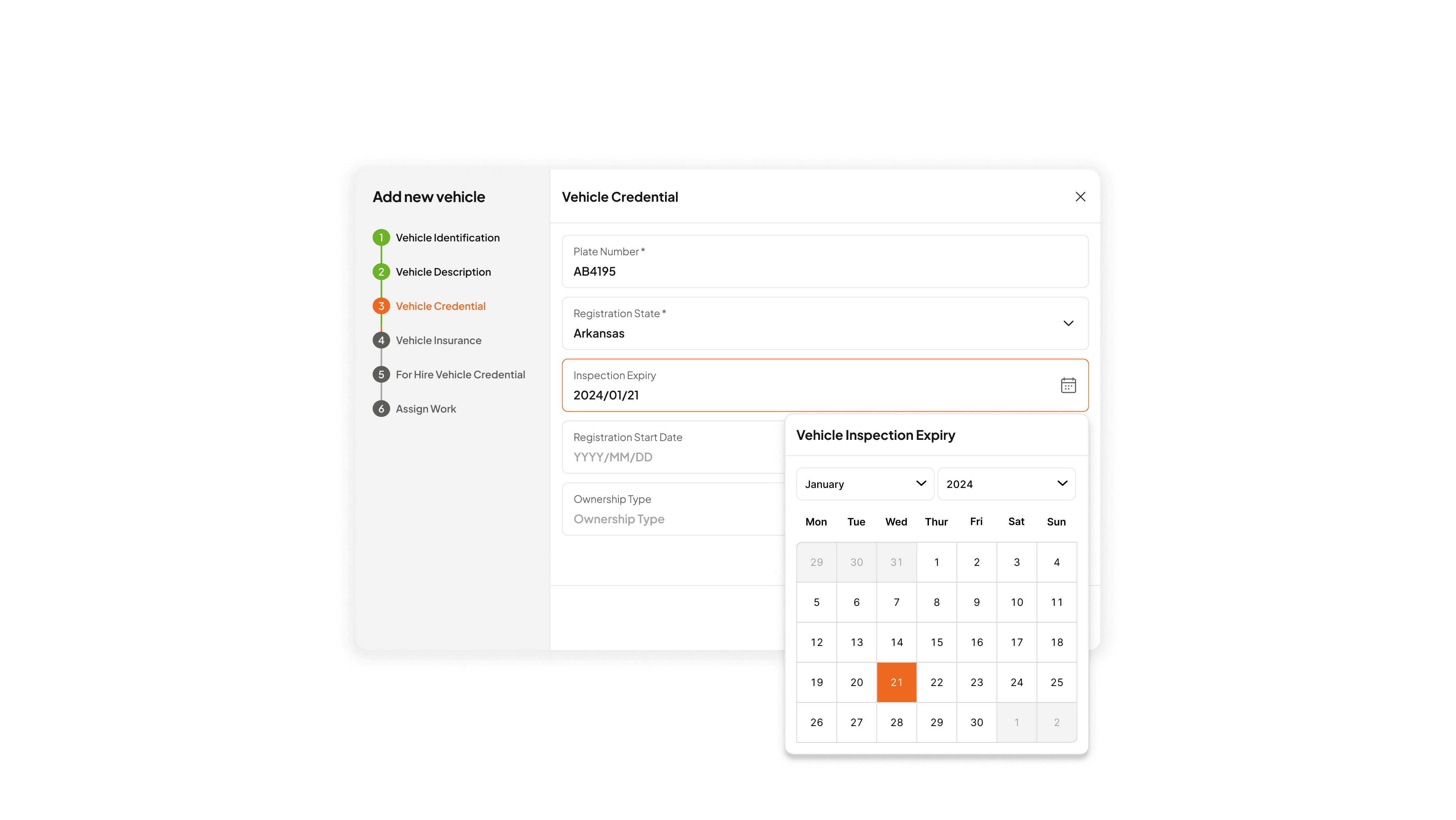
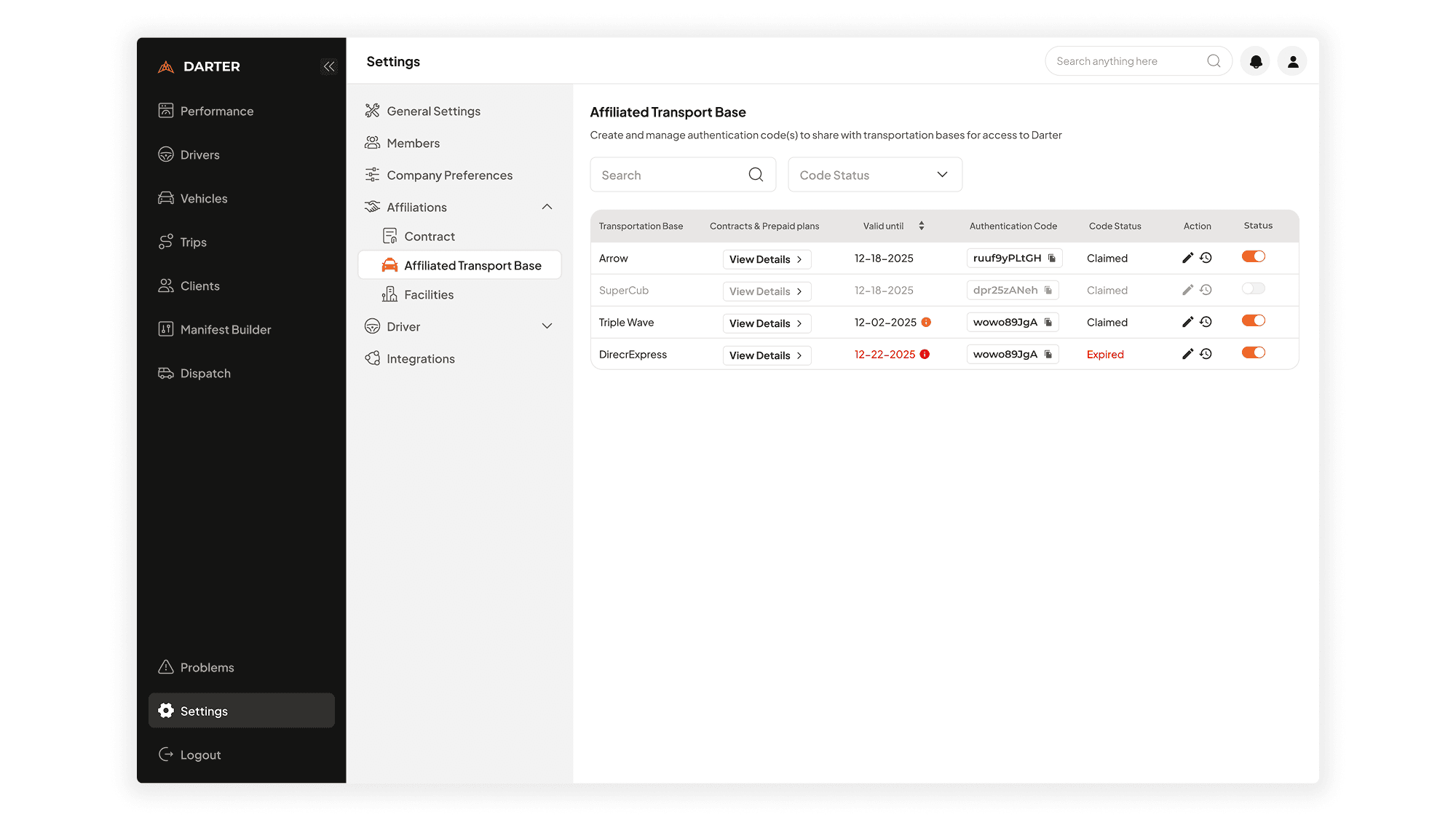
A refined navigation built for clarity, scalability, and cohesion across the product. It helps users move with confidence through a more structured and intuitive layout. As the product grows, the system stays consistent and easy to expand.
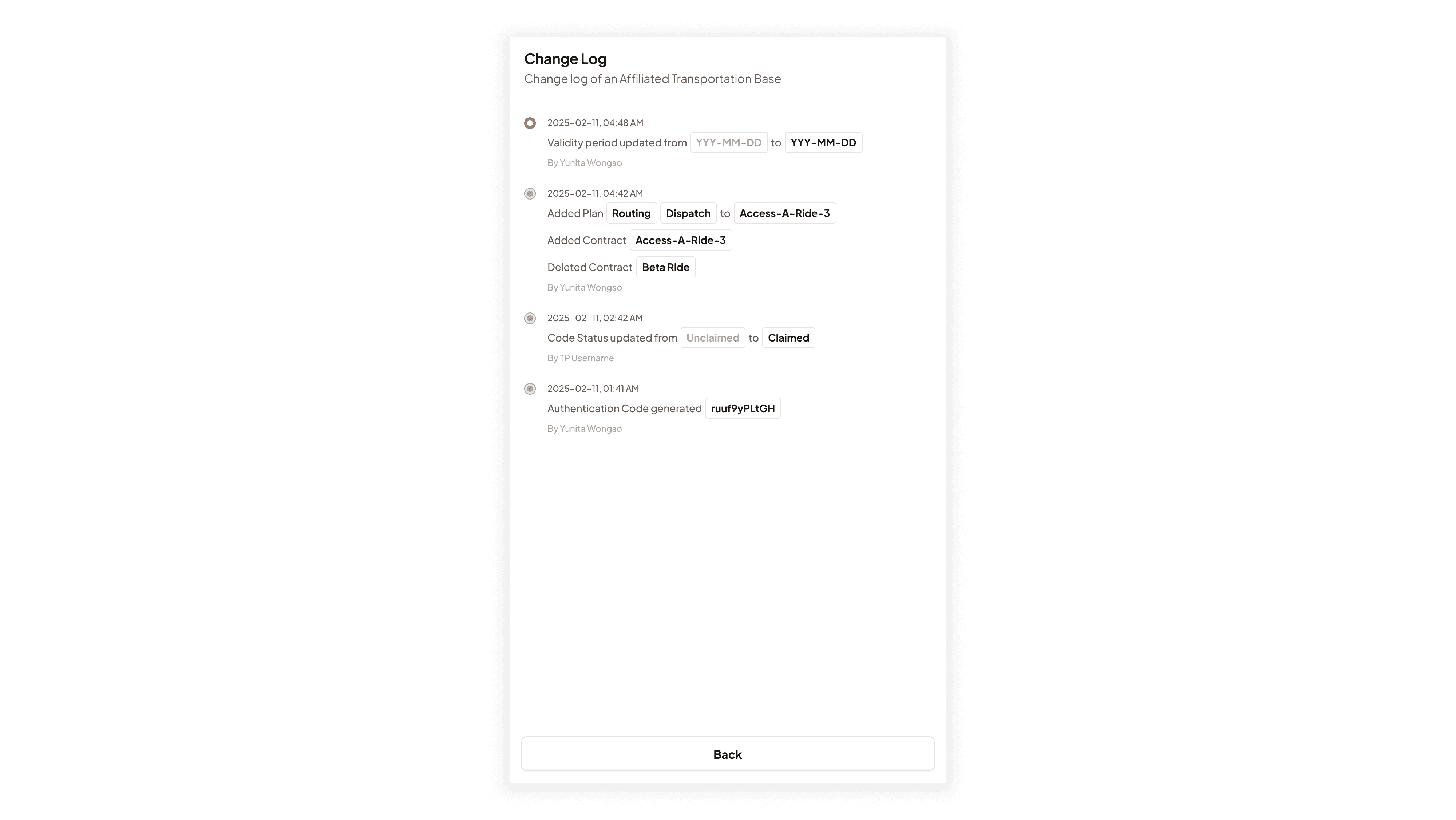
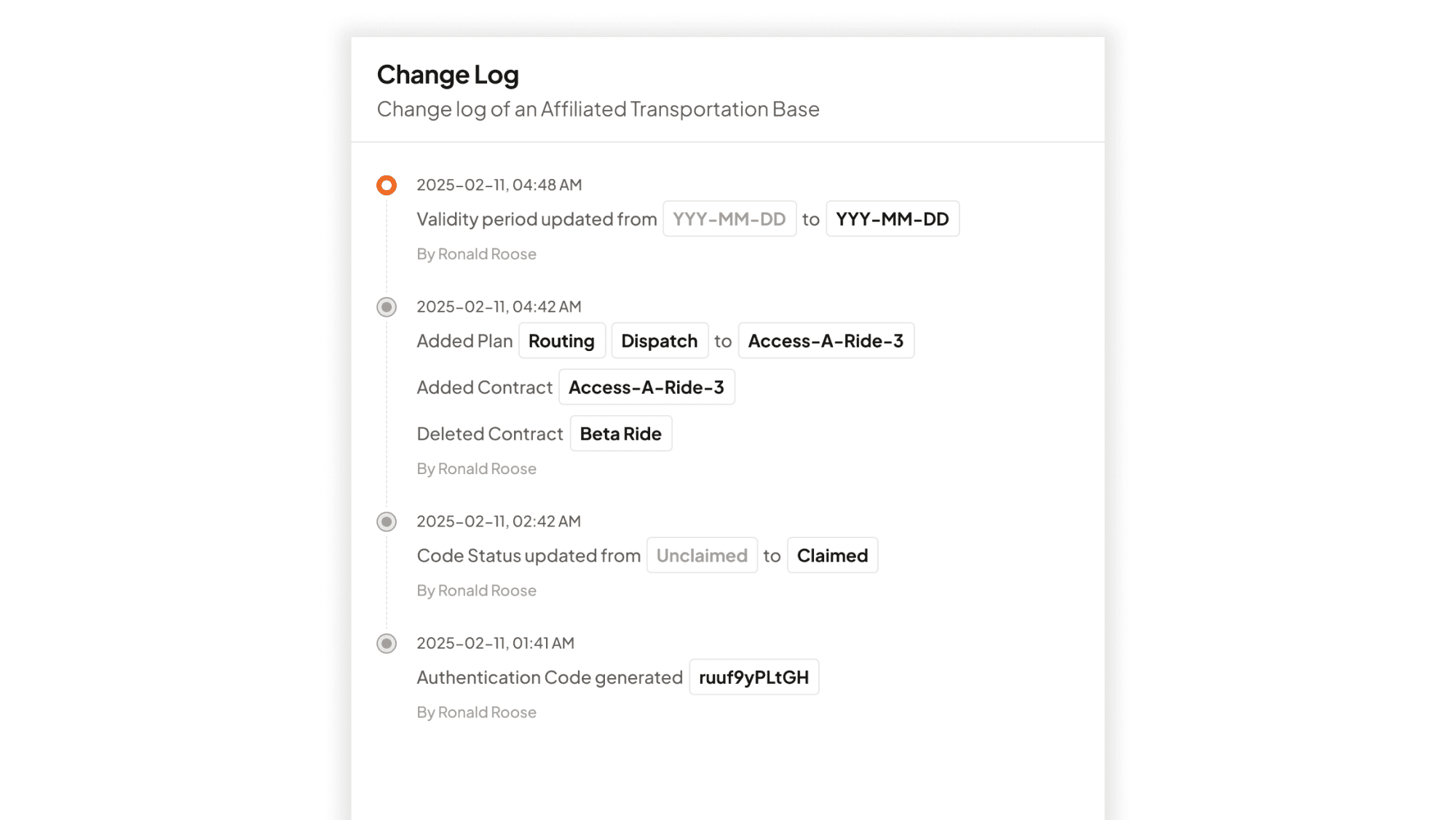
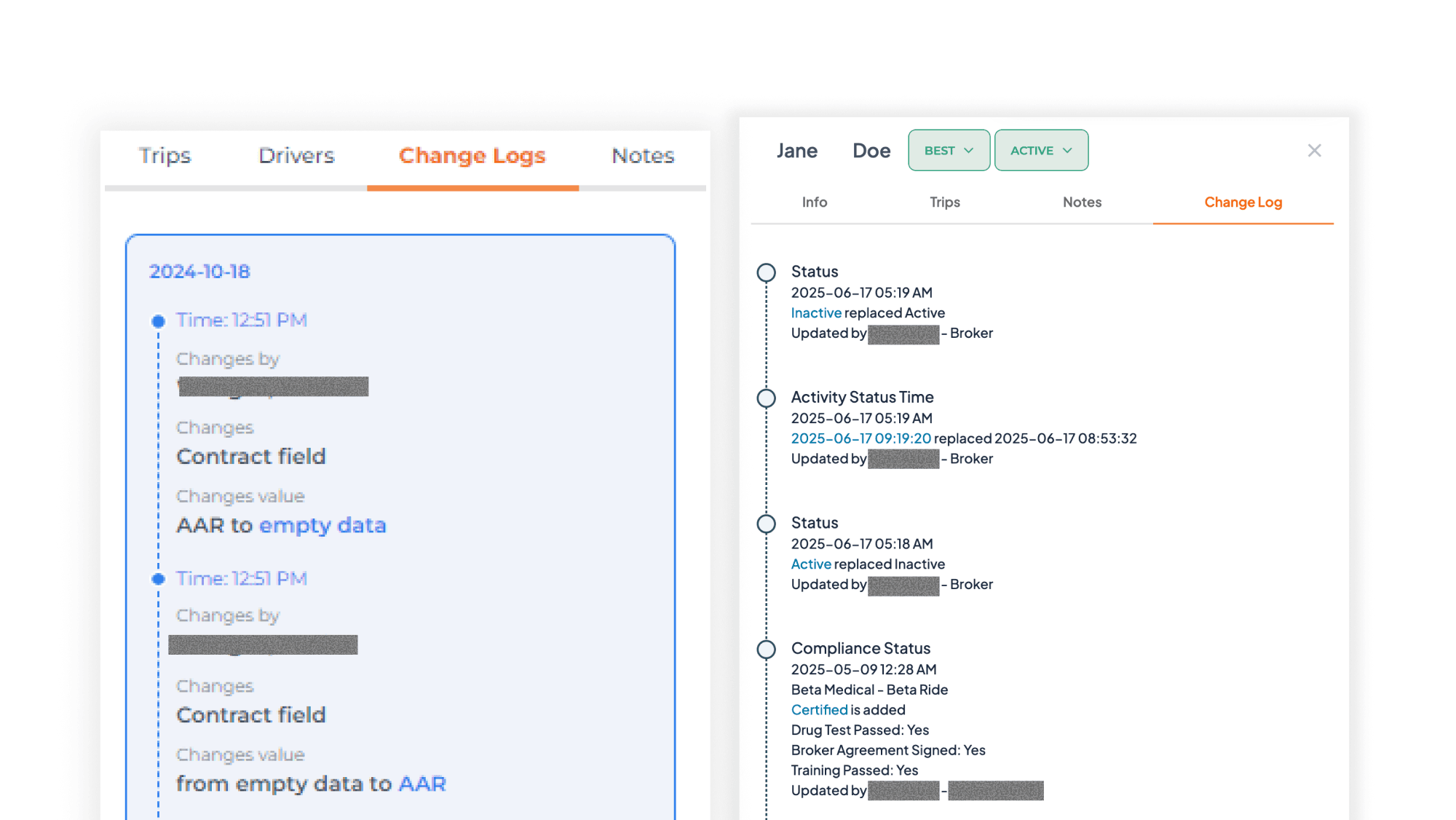
Refining Change-log Components
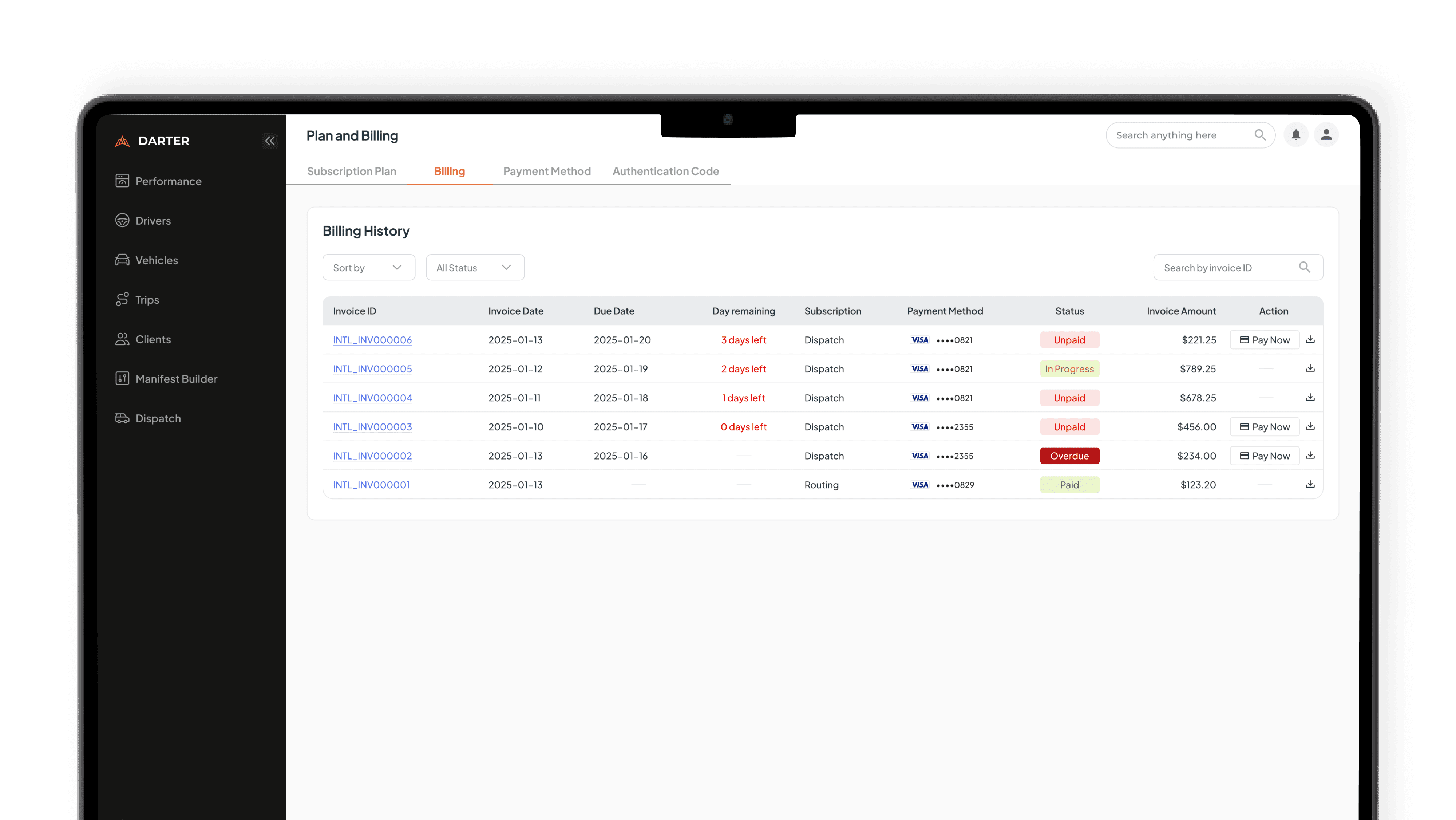
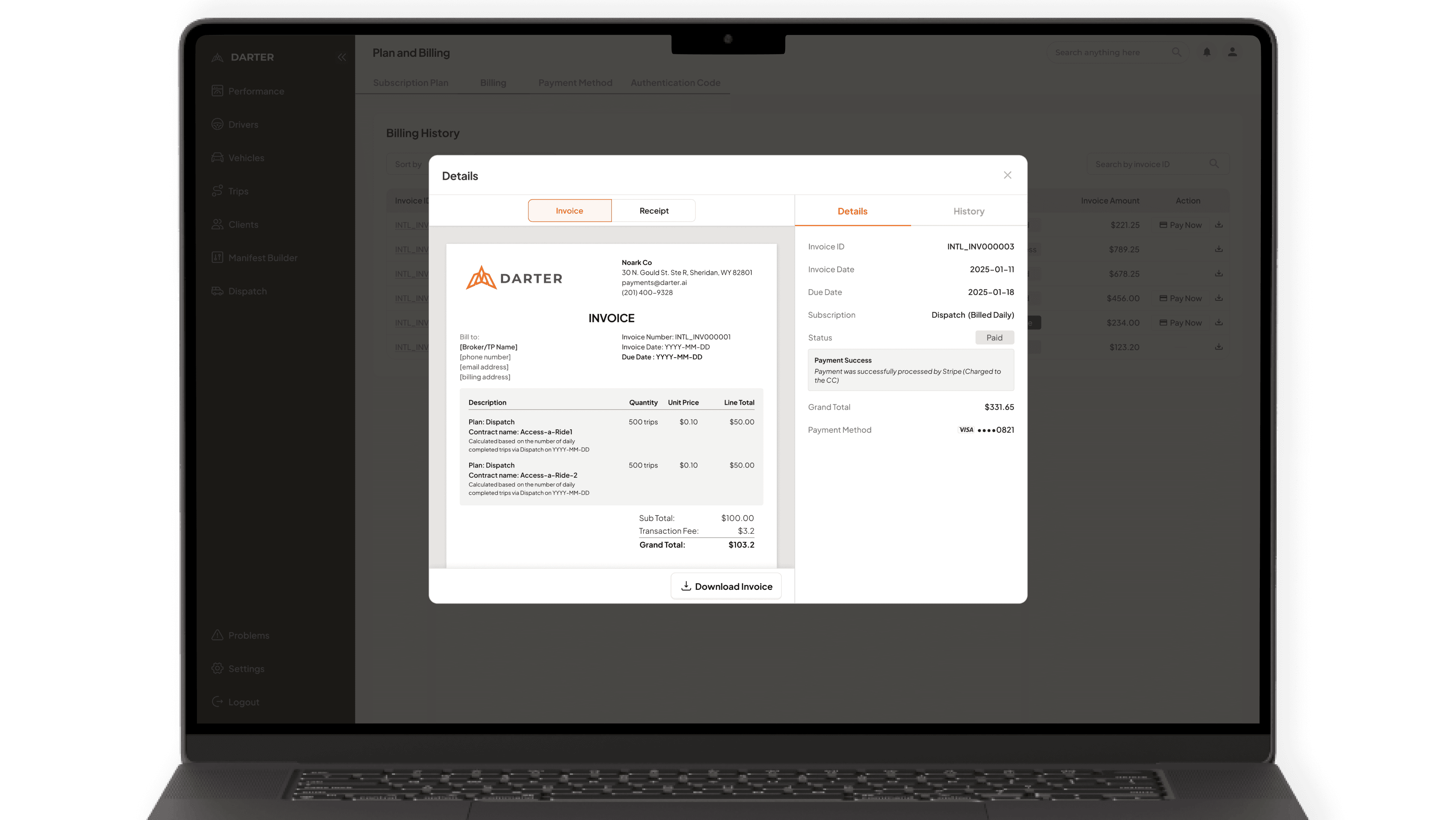
A redesigned changelog that brings clarity and cohesion across the entire product. It helps users understand updates easily while keeping the component consistent and scalable for future needs. This ensures every release feels organized, predictable, and effortless to follow.
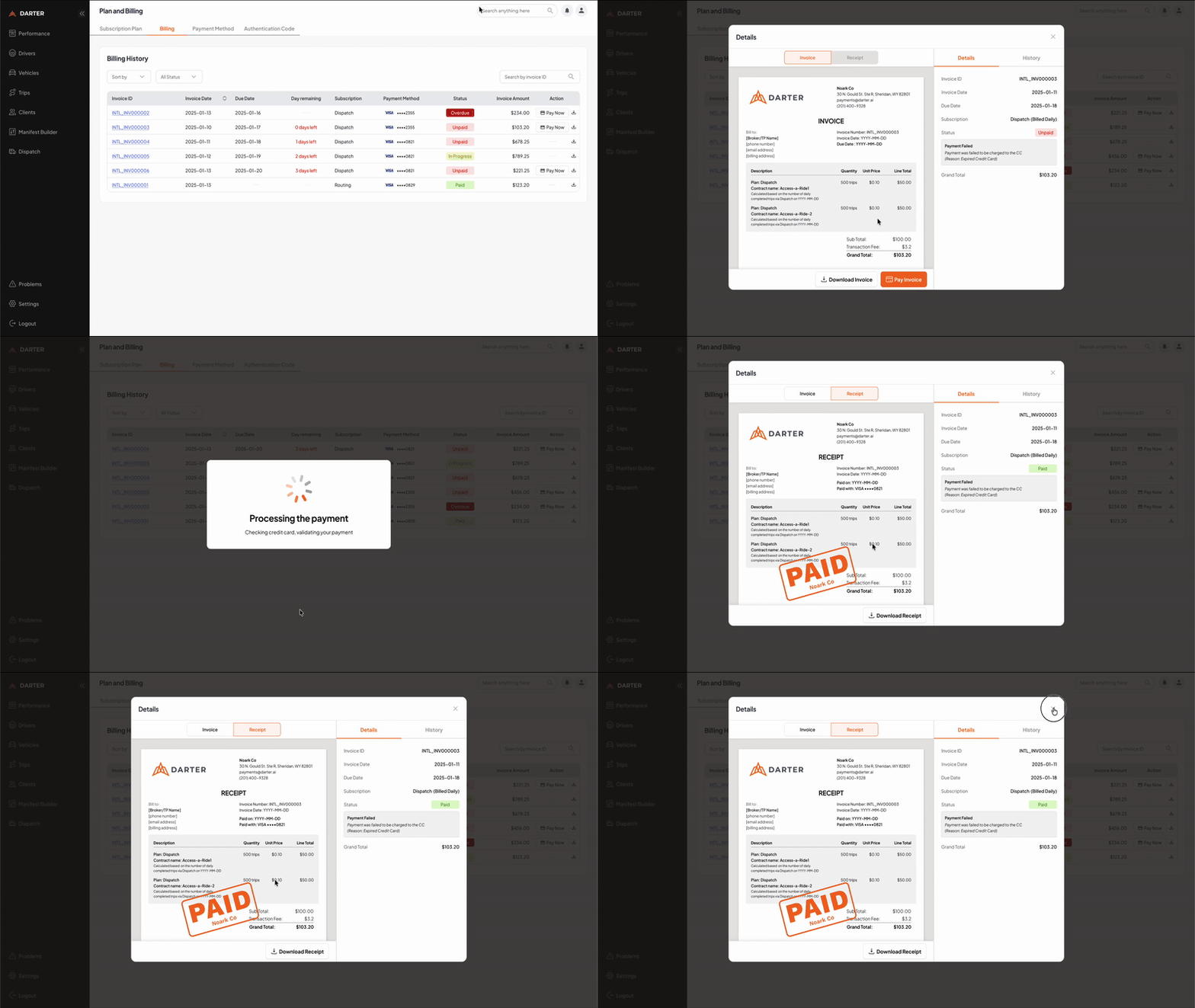
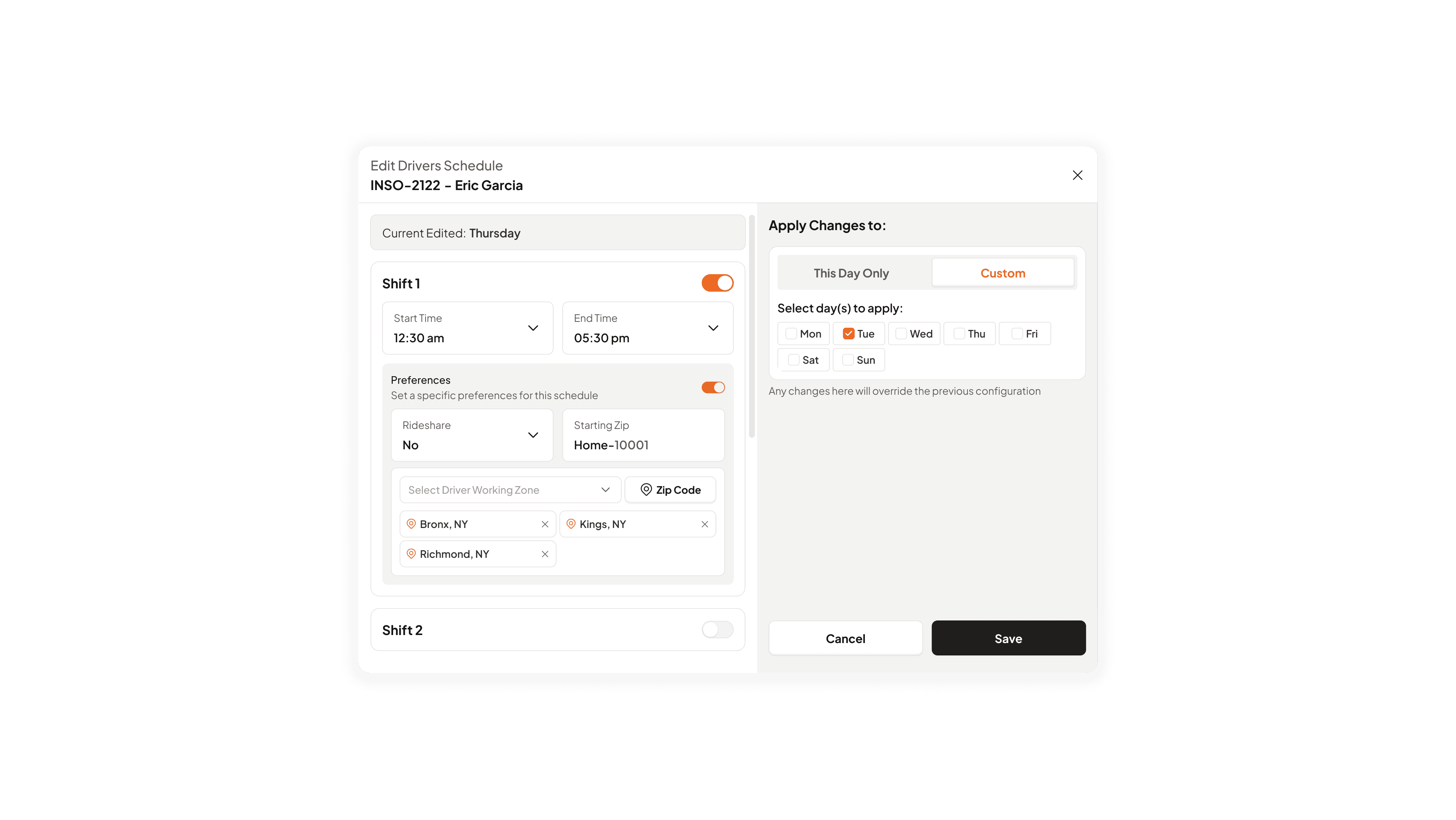
Clarity on Drivers App
A clearer, more cohesive navigation that guides drivers with ease. It improves how drivers move through the app by simplifying choices and organizing key actions. As the product grows, the navigation remains scalable, consistent, and effortless to follow.
Conclusion
Conclusion & Strategic Impact
This project was a critical intervention that transitioned the company from a fragmented, inefficient design process to a scalable, cohesive, and high-velocity product organization. The success of this initiative was built on a foundation of strategic research, principle-driven design, and rigorous execution.
Maximizing Efficiency and Scalability
Problem
The absence of a foundational layer led to teams rebuilding the same components, creating time-consuming debates and high maintenance costs.
Solution
We drafted a Strategic Roadmap prioritizing core foundations to quickly unlock engineering velocity. By establishing the Design Tokens Library, we eliminated guesswork, reducing design handoff time by 75%. This focus on efficiency is the engine of Scalability.
Defining Clarity and Cohessivity
Problem
Fragmented user experience and broken UI structure due to non-intentional color usage and poor spatial efficiency (e.g., the Montserrat typography problem).
Solution
I defined and rigorously applied the principles of Clarity (easy user comprehension) and Cohesion (visual consistency). This involved the Testing and Validation of new typefaces (Plus Jakarta Sans) and the creation of a semantic Color Library, directly solving critical user pain points and elevating overall product quality.
Strategic Alignment and Business Vision
Mandate
Create a scalable platform foundation to support company expansion, framing the design project as critical business enablement, not just a cosmetic refresh.
My Contribution
By mapping organizational friction to platform weaknesses, I ensured the resulting design foundation was not just a visual fix, but a targeted solution for accelerating business goals and guaranteeing long-term system adoption.